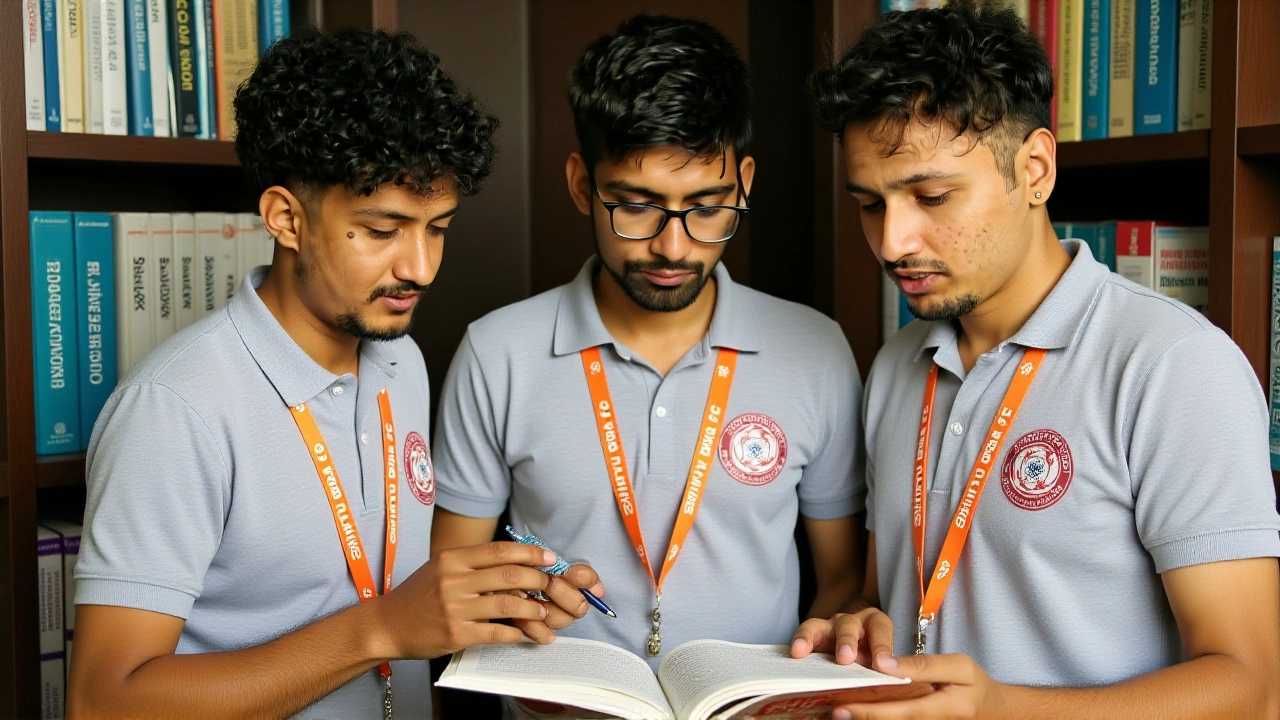
When Shubham Kumar, a student from the IIT Delhi zone, secured All India Rank 1 in the Joint Entrance Examination (JEE) Advanced 2026, he didn’t just win a spot at an elite institute—he set a new benchmark for perfection. Scoring 330 out of 360 possible marks, Kumar edged out his competitors by a razor-thin margin of just one point.
The results were declared on Monday, 1 June 2026, by the Indian Institute of Technology Roorkee, which served as the organizing body for this year’s exam. For thousands of families across India, that morning marked the end of months of anxiety and the beginning of a new chapter in their academic lives.
A Narrow Margin for National Topper
Here’s the thing about competitive exams like JEE Advanced: the difference between first and second place can be microscopic. This year was no exception. While Shubham Kumar claimed the top spot with 330 marks, Kabir Chhillar (also spelled Kabeer in some reports) followed closely behind with 329 marks to secure AIR 2. Both students hail from the IIT Delhi zone, highlighting the region’s strong coaching infrastructure and academic rigor.
Coming in third was Jatin Chahar, also from the IIT Delhi zone, with 319 marks. The intensity of competition is evident when you look at the top 10 list. It includes names like Mohit Shekher Shukla (319 marks, IIT Madras zone) and Kuchi Sandeep (318 marks, IIT Madras zone), showing that high scores weren’t confined to a single geographic area.
But wait—there’s more to the story than just the overall rankers. Category-wise toppers played a crucial role in shaping admission outcomes. B Jayakrishna Srinivas from the IIT Bombay zone emerged as the top performer in the OBC-NCL (Other Backward Classes – Non-Creamy Layer) category, scoring 314 marks. His achievement underscores how reservation policies continue to provide pathways for talented students from diverse backgrounds.
Female Representation Makes Strides
In a field historically dominated by male candidates, female performance this year offered a glimmer of progress. Arohi Deshpande, also from the IIT Delhi zone, stood out as the highest-ranked female candidate, securing Common Rank List (CRL) position 77 with 280 marks. Her score is impressive not just because of its magnitude but because it places her among the top 0.1% of all qualified candidates.
Behind Deshpande, other women made significant marks. Korukonda Sravya took CRL 111, Sanvi Patidar landed at 158, and Reddi Sai Sahithi reached 230. These numbers tell a broader story: while gender parity remains elusive, the pipeline of skilled female engineers is slowly widening. Still, only 10,107 of the 56,880 qualified candidates were women—a figure that suggests there’s still work to be done.
Exam Structure and Participation Numbers
To understand why these scores matter, you need to grasp the scale of the challenge. JEE Advanced 2026 was conducted as a Computer-Based Test (CBT) over two papers, each lasting three hours. That’s six hours of intense problem-solving in Physics, Chemistry, and Mathematics, with 54 questions per paper. The maximum aggregate score was 360 marks, split evenly between Paper 1 and Paper 2.
Registration opened on 23 April 2026, and despite minor discrepancies in reported deadlines (some sources cite 2 May, others 5 May), the final count shows that 187,389 candidates registered for the exam. Of those, 179,694 actually appeared for both papers, and ultimately, 56,880 qualified. That means roughly 31.6% of participants cleared the cutoff—a statistic that reflects the exam’s notorious difficulty.
The timeline leading up to result day was tightly packed. After registration closed, candidates awaited the exam date: Sunday, 17 May 2026. Then came weeks of silence before IIT Roorkee released the results on 1 June. Just days later, on 7 June, the Architecture Aptitude Test (AAT) results were announced, opening doors for aspiring architects who had cleared the main exam.

What’s Next for Aspirants?
Now that the dust has settled, attention shifts to the Joint Seat Allocation Authority (JoSAA) counseling process. This phase determines where each qualified candidate will study based on their rank, preferences, and seat availability. With over 56,000 qualifiers vying for limited seats across 23 IITs, the stakes remain high.
Experts note that this year’s results reflect a trend toward higher scores at the top end. In previous years, perfect or near-perfect scores were rare; now, they’re becoming more common. Why? Better preparation resources, online learning platforms, and increased awareness of exam patterns have leveled the playing field—for some, at least.
Still, regional disparities persist. While zones like Delhi, Bombay, and Madras produced most of the top rankers, other regions lagged behind. Addressing this imbalance requires systemic changes in education quality outside urban centers—a task that goes beyond any single exam cycle.
Frequently Asked Questions
Who topped JEE Advanced 2026?
Shubham Kumar from the IIT Delhi zone secured All India Rank 1 with a score of 330 out of 360 marks. He narrowly beat Kabir Chhillar, who scored 329 marks to claim AIR 2.
How many candidates qualified in JEE Advanced 2026?
Out of 179,694 candidates who appeared for the exam, 56,880 qualified. Among them, 10,107 were female candidates, representing approximately 17.8% of the total qualifiers.
Who was the top female ranker in JEE Advanced 2026?
Arohi Deshpande from the IIT Delhi zone was the highest-ranked female candidate, securing CRL position 77 with 280 marks. Other notable performers included Korukonda Sravya (CRL 111) and Sanvi Patidar (CRL 158).
When were the JEE Advanced 2026 results declared?
The results were officially declared on 1 June 2026 by the Indian Institute of Technology Roorkee, which organized the exam. Candidates could view their scores and rank cards on the official JEE Advanced portal starting at 10:00 AM IST.
What happens after JEE Advanced results are announced?
Qualified candidates enter the JoSAA counseling process, where they choose preferred IITs and branches based on their ranks. Additionally, architecture aspirants received separate AAT results on 7 June 2026, allowing them to apply for B.Arch programs.
Which zones produced the most top rankers?
The IIT Delhi zone dominated the leaderboard, producing four of the top five rankers, including the national topper Shubham Kumar. The IIT Bombay and Madras zones also contributed significantly, with multiple candidates entering the top 10.